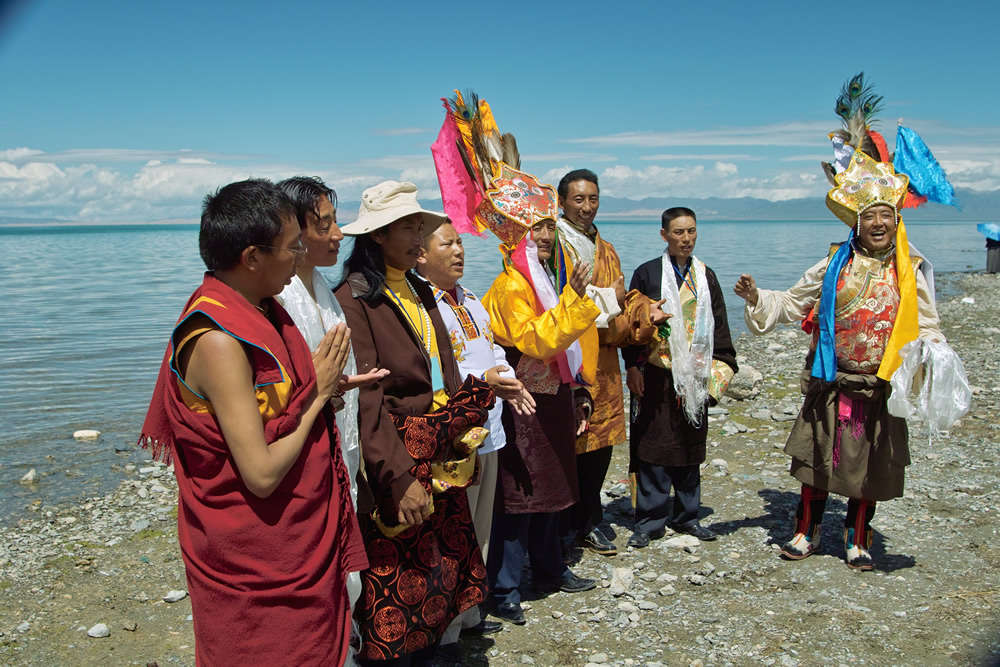
Gesar Epic Tradition
Introduction
The Gesar Epic Tradition is an extensive and enduring oral tradition celebrated among the Tibetan, Mongolian and Tu ethnic groups in western and northern China. Recognized as the longest epic in the world, it details the heroic exploits of King Gesar, a legendary figure sent from heaven to vanquish monsters, dethrone the powerful, and aid the weak, thereby unifying disparate tribes. The tradition was inscribed on UNESCO's Representative List of the Intangible Cultural Heritage of Humanity in 2009. The epic is a vital cultural repository, an oral narrative performed by singers and storytellers who recount episodes using prose and verse, often enriched with local variations.
History
The origins of the Gesar Epic can be traced back to the 11th century, although it was primarily propagated through oral transmission across generations. This epic narrates the adventures of King Gesar, who is seen as a messianic figure sent by the gods to restore balance by defeating demons and uniting warring tribes. Over the centuries, the epic has not only functioned as entertainment but has also served as a historical and cultural chronicle, reflecting the values, beliefs and social structures of the Tibetan and Mongolian peoples. It has been an integral part of the oral tradition on the Qinghai-Xizang Plateau, where it continues to be a living tradition.
Content of Gesar Epic
The structure of the Gesar Epic is characterized by its "beads on a string" format, comprising hundreds of myths, folktales, ballads and proverbs woven together. The narrative is delivered in alternating passages of prose and verse, allowing flexibility and adaptability across different performances. The content is incredibly vast, with some storytellers being able to recite millions of words over numerous episodes. These narratives cover a wide range of themes, including morality, religion, history and social customs, acting as a comprehensive cultural encyclopedia for its audiences.
Central themes in the Gesar Epic include heroism, divine intervention, the struggle between good and evil, and the unification of fragmented communities. The motifs often involve celestial beings and demons, showcasing the heroism of King Gesar and his divine mandate to restore harmony. The narratives also explore human virtues such as bravery, loyalty and justice, with an underlying emphasis on the protection of the weak and the ultimate triumph of righteousness. These themes resonate deeply with the cultural and spiritual values cherished by the communities that uphold the tradition.
Oral Tradition and Performance
The Gesar Epic is a dynamic oral tradition deeply embedded in the cultural fabric of Tibetan, Mongolian and Tu communities. Performances are highly interactive and are often accompanied by rituals such as offerings and meditation. Storytellers, known as bards, play a crucial role in preserving and disseminating the epic. They utilize various storytelling techniques and perform with instruments like the bronze mirror and fiddles to enhance the narrative experience, engaging audiences through dramatic expressions, sound effects and gestures.
Storytelling Techniques
The storytelling techniques employed in the Gesar Epic performances are richly varied. Tibetan storytellers often incorporate facial expressions, sound effects and gestures to dramatize the narrative, while Mongolian performers may accompany their tales with fiddles, interspersing melodic singing with musical storytelling. These techniques serve to captivate and engage audiences, making each performance a unique rendition of the epic.
Role of Bards
Bards are essential to the survival and dissemination of the Gesar Epic. Traditionally, these storytellers are not formally educated, yet they possess an extraordinary ability to memorize and recite extensive portions of the epic. They are revered as cultural custodians who ensure the tradition's continuity by performing in public gatherings, rituals and ceremonies. The bards' role extends beyond performance as they often contribute to the adaptation and evolution of the epic by incorporating contemporary elements and regional dialects into the narrative.
Cultural Significance
The Gesar Epic holds profound cultural significance as it serves as a vital repository of the history, beliefs and values of the Tibetan, Mongolian and Tu peoples. The epic reinforces cultural identity and continuity, offering a sense of belonging and shared heritage among its audiences. It also functions as a pedagogical tool, imparting moral lessons and cultural knowledge to younger generations. The epic's themes and narratives continue to inspire various art forms such as thangka painting and Tibetan opera, further embedding it in the cultural consciousness of the communities.
Preservation and Promotion
Efforts to preserve and promote the Gesar Epic have intensified in response to the challenges posed by modernization and the dwindling number of traditional storytellers. Organizations and cultural institutions have initiated various projects to document the epic and support the training of new bards. Educational programs have been established in schools to encourage the study and performance of the epic among young people.
In recent years, the Gesar Epic has seen various adaptations and modern interpretations, ranging from literary works to stage performances and films. These adaptations aim to introduce the epic to broader audiences, both within and outside the traditional communities. Modern interpretations often incorporate contemporary themes and issues, ensuring the epic's continued relevance in a rapidly changing world.








